
How to Help Your Child Learn Quran at Home: 7 Practical Steps for Busy Parents
Seven practical steps busy parents can use to help their children learn the Quran at home — from building a daily routine to choosing the right teacher.
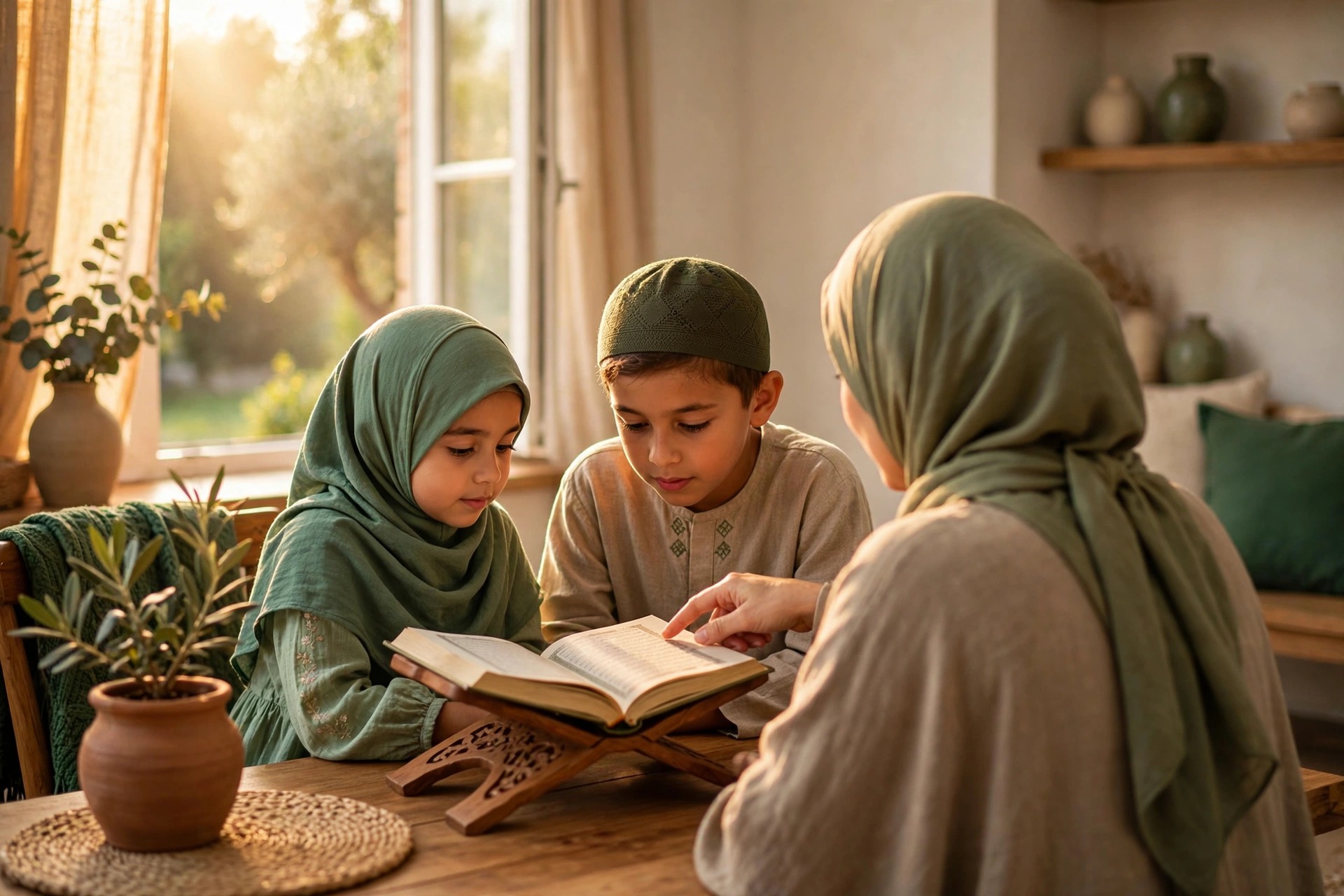
Every Muslim parent dreams of hearing their child recite the Quran beautifully. But between school, work, and daily life — especially for families in the UK, USA, and Canada — finding the right way to start can feel overwhelming. Here are seven practical steps that actually work.
1. Start Early, But Never Force
The Prophet ﷺ said: "The best of you are those who learn the Quran and teach it." (Sahih al-Bukhari 5027)
Children as young as 4–5 can begin with Noorani Qaida — learning Arabic letters through play and repetition. The key: keep sessions short (15–20 minutes) and joyful. A forced child resists; a happy child returns.
2. Fix a Daily Time — Same Time, Every Day
Consistency beats intensity. Ten minutes daily at Fajr or after Maghrib builds a stronger habit than one long weekend session. Tie Quran time to an existing routine, like right after a Salah.
3. Learn Tajweed Yourself First
Children copy what they hear. If a parent recites with mistakes, the child absorbs those mistakes. Even learning the basics of Makharij (articulation points) yourself will transform your child's recitation.
4. Use the "Listen, Repeat, Recite" Method
- Listen — play a slow, clear recitation (e.g. Sheikh Al-Husary)
- Repeat — child repeats each verse after you
- Recite — child recites the verse alone
Three repetitions per verse is the golden rule for young memorizers.
5. Reward Progress, Not Perfection
Celebrate every milestone — finishing the Arabic alphabet, completing a Surah, memorizing the first Juz. A small gift or special outing for each achievement keeps motivation alive for years.
6. Make Dua Part of the Routine
Begin each session with the dua: "Rabbi zidni ilma" (My Lord, increase me in knowledge — Quran 20:114). It teaches children that Quran learning is worship, not homework.
7. Get a Qualified Teacher — Even Online
Parents are the first teachers, but a qualified Quran teacher gives structure, corrects Tajweed, and tracks progress professionally. One-to-one online classes mean your child learns from certified scholars without leaving home — on a schedule that fits your timezone.
Final Thought
Raising a child who loves the Quran is a marathon, not a sprint. Start small, stay consistent, and make it beautiful. The seeds you plant today will shade your family for generations, in shaa Allah.
Ready to begin? Book a free trial class at Omari Islamic Academy — one-to-one live Quran classes for kids and adults, with qualified teachers. WhatsApp us at +92 339 924 3741.
Related Articles
 Islamic Parenting
Dear Parent, Don't Give Up: 7 Reminders When Teaching Your Child the Quran Feels Hard
Some days your child forgets the surah, resists the lesson, and you wonder if any of it is working. This is for you — seven reminders from the Quran and Sunnah that your effort is seen, recorded, and never wasted.
 Islamic Parenting
How to Choose an Online Quran Teacher: 7 Questions Every Parent Should Ask
Seven questions every parent should ask before enrolling their child — from teacher qualifications and Tajweed to trial classes, motivation, and red flags to avoid.
 Islamic Parenting
Online Quran Classes vs Local Madrasa: Which Is Better for Your Child?
Madrasa or online Quran classes? An honest comparison for Muslim parents in the UK, USA & Canada — the pros and cons of each, and how to choose the right Quran teacher for your child.